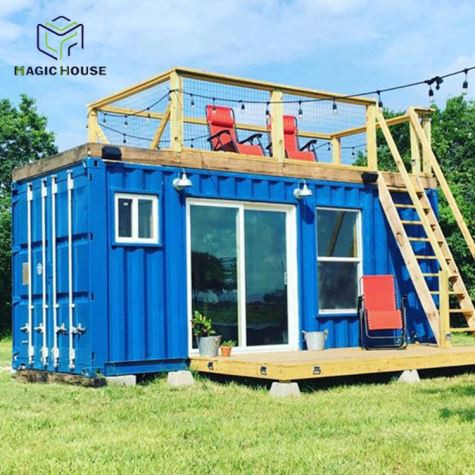
As the world becomes increasingly mobile and people seek unique experiences, modular container hotels have become a popular trend. These hotels are constructed using shipping containers, which are designed to be easily transported by sea, rail, or truck. Containing all the necessary amenities, modular container hotels provide a convenient and cost-effective accommodation solution for travelers.
Another innovative use for shipping containers is the development of container homes. With the rise of sustainability and the desire to reduce waste and promote recycling, container homes are becoming an increasingly attractive option. By converting shipping containers into homes, people are able to create affordable and eco-friendly housing solutions.
One particular use for converted shipping containers is in the construction of container motels. These motels take the idea of a modular hotel to new heights by using multiple containers to create a multi-room accommodation option. By stacking and arranging containers in different combinations, architects and designers can create unique structures that provide a comfortable and stylish stay for guests.
Finally, another popular use for shipping containers is in the creation of container Airbnb's. With a little bit of creativity, shipping containers can be transformed into unique and stylish accommodations that are perfect for travelers who want to try something new. Container Airbnb's are also an eco-friendly option as the containers are often repurposed, which reduces waste and environmental impact.
In conclusion, modular container hotels, hunting container hotels, container homes, container motels, and container Airbnb's are just a few of the innovative uses for shipping containers. The flexibility, affordability, and eco-friendliness of shipping containers have made them a popular alternative to traditional accommodation options. As people continue to seek out new and unique experiences, it is likely that we will see even more innovative uses for shipping containers in the future.
Size:5.8/11.8*2.2*2.5meters
Production cycles for prefabricated homes are shorter. A site-built home usually takes more than three months from start to finish. Site work, production, and set-up of a modular or manufactured home can take a month or less. Of course, this depends on the complexity of the multi-section units.
Quality control of prefabricated homes is superior because they are produced in a climate-controlled setting by professionals who build houses on a daily basis. These employees are specialists; they repeat the same tasks daily, are subject to supervision by skilled tradespersons, and have continuing training.
Cool tags: